“4600 -7200 ft” search results (300)

Coffee beans in the highlands of southern and western Ethiopia
Growing in the western highlands of southern Ethiopia (the border of Shewa and Sidmo provinces), east of Jima, north of Sidamo, most Europeans and Americans prefer 3600-6200 feet above sea level, most of them are washed with water, their annual output is about 110000bags/60kg, most of the beans are round (15/16scr), the color is green and bluish, the export is mostly G2 grade, the taste is similar to Yegashev, but the viscosity is simple.
2016-06-14 Ethiopia Obi Anan West Highlands Coffee beans grow in Ethiopia
Flavor of Jamaican Coffee Manor introduction to the characteristics of Jamaican coffee beans in Atlanta manor
Clifton Hill Village, filmed by Marianne in 1872, began to grow and produce coffee at Clifton Farm as early as the mid-18th century (around 1750). According to a survey conducted by the Jamaica Institute in 1810, Robert Hamilton was the owner of the farm at that time. This map shows that Clifton Mountain is divided into two parts, with 80 acres of coffee and 427 acres of grazing at the top.
2016-07-18 Jamaica Coffee Manor producing area Flavor introduction Art Grand Manor Coffee beans
Rwandan Coffee Flavors Rwandan Coffee Features
Maraba coffee (Rwandan: Ikawa ya Maraba, French: Caf de Maraba) is a Fairtrade certified coffee grown in the Maraba region of southern Rwanda. Malaba's coffee crop is a bourbon variety of Arabica species grown on fertile volcanic soils in high-altitude hills. The fruits of coffee trees are mainly harvested manually during the rainy season between March and May.
2016-08-29 Rwanda Coffee Flavors Features
Introduction of Variety treatment method for Coffee Flavor description and Grinding degree of Lemon Manor in Nicaragua
Nicaraguan coffee [original name]: Cameroon UCCAO Caplami Java [variety]: Java Java Arabica species [growth altitude]: 5000 ft [raw bean treatment]: semi-washed Semi-Washed Process [origin]: West Africa-western Cameroon plateau [producing areas / estates / cooperatives]: UCCAO Caplami Cooperative [label]
2016-10-21 Nicaragua lemon tree manor coffee flavor description grinding characteristics variety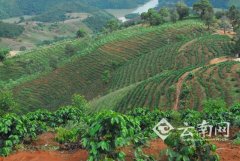
Coffee cultivation in Lincang City has become the second largest coffee producing area in Yunnan.
It was learned from the conference on the development and promotion of coffee industry in Lincang City, Yunnan Province that by the end of 2013, the coffee planting area in Lincang City had reached 554200 mu, making it the second largest coffee producing area in Yunnan.
2014-06-05 Coffee News Lincang Coffee Coffee cultivation Yunnan Coffee
Introduction to Santa Barara Manor San Juan Heido
Berries for everyone to popularize what is coffee leaf rust
2016-07-12 Honduras Coffee producing area Manor introduction Sanba Lara San Hu Theodore
Introduction of Brazilian Yellow bourbon Coffee Bean Flavor Variety Taste Manor Grinding method
Brazilian boutique coffee beans have proved that Brazil also has the ability to produce gourmet coffee and small batches of coffee. Local boutique coffee may not only be provided by small-scale coffee farmers. The main coffee producing areas in Brazil are Sulde Minas South Minas, Matas de Minas Minas Southeast Mountain Forest, Cerrado Hirado, Chapadas de Minas Minas Central and Northern Mausoleum, M.
2016-10-21 Brazil yellow bourbon coffee beans flavor characteristics variety taste manor grinding place
Introduction to the quality of balanced sweet Brazilian yellow bourbon coffee flavor description grinding scale treatment
Brazilian coffee was first introduced to Brazil in the early 18th century. In 1727, the Brazilian government sent a personable army officer to secretly bring coffee seeds from French Gaiana to Brazil on the pretext of mediating border disputes. It is said that the governor's wife of French Gaiana was so fascinated by the officer that she secretly brought coffee tree seeds to him at a farewell dinner.
2016-10-20 Balanced sweet Brazil yellow bourbon coffee flavor description grinding scale processing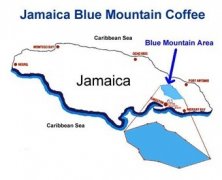
Clifton Manor, No. 1 Blue Mountain, Jamaica
Many connoisseurs in the world believe that Jamaican Blue Mountain Coffee is one of the best in the world. The excellent balance of aroma, mellow thickness and acidity makes Blue Mountain Coffee very special. However, what really sets Blue Mountain Coffee apart is its round, sweet aftertaste.
2014-08-20 Coffee knowledge Jamaican Manor Blue Mountain Coffee
Introduction to Santa Barara Manor in Honduras Coffee Manor
Berries for everyone to popularize what is coffee leaf rust
2016-07-13 Honduras Coffee Manor producing area Flavor Taste introduction Sanba Lara
Introduction of Kenyan Coffee Flavor and Taste Fine Coffee beans in Kenya Coffee producing area
Founded in 1999 in Embu, Kenya, the cooperative has 1200 active growers and the cleanest water treatment centers. It is well known that cooperatives pay producers far higher than government requirements. In Kenya, cooperatives have to pay 80 per cent of the final income to coffee farmers, and Kithungururu ends up paying 95 per cent more to coffee farmers than other cooperatives. [producing area] in Kenya
2016-07-29 Kenya coffee flavor taste introduction producing area boutique coffee beans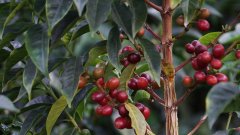
Limu Ethiopian grass and black sugar aroma fruit acid bright boutique coffee
The coffee-producing region of Ethiopia is divided into east and west parts by the East African Rift Valley, with lakes, volcanoes, lowlands, plateaus and woodlands interlaced, each evolving. Ethiopia has the most diverse coffee ecosystem in the world (forest coffee, semi-forest coffee, pastoral coffee and plantation coffee), which also preserves its rich Arabica genes. The eastern half is mostly plateaus, coffee beans.
2016-07-04 Lim Limu Ethiopia grass aroma sour bright boutique coffee
Grade Planning for the handling of Salvadoran Coffee introduction to the Santa Ana volcano area
Coffee treatment, washing treatment, sun drying. Coffee grades are classified according to altitude, the highest is SHG: SHG,strictly high grown,3950 feet (about 1200 meters); HG, high grown, 2950 feet (about 899m); CS, central standard, 1960 feet (about 597m). Note: 1 feet ft
2016-07-02 El Salvador Coffee treatment method Grade Planning introduction Anna Volcano Earth
Boutique Coffee Manor Silver Mountain Manor in Jamaica Blue Mountain Coffee Flavor and taste characteristics
As early as the mid-18th century (around 1750), Clifton Farm began to grow and produce coffee. According to a survey conducted by the Jamaica Institute in 1810, Robert Hamilton was the owner of the farm at that time. This map shows that Clifton Mountain is divided into two parts: 427 mu of pasture with 80 mu of coffee at the top, 111 mu of coffee and 264 mu of grazing at the foot of the mountain.
2016-07-12 Boutique coffee manor Jamaica Silver Mountain introduction Blue Mountain Alpine Flavor Taste
Introduction to Santa Barara Manor in Honduras Coffee Manor
The policy of agricultural transformation adopted by the Honduran government is closely related to the 18-month low of the raw coffee bean market. Many futures analysts predict that stocks in many major coffee-producing countries will rise in the near future, but this is only a prediction. As of this book, the latest futures coffee price is $1.1705. Berries for everyone to popularize what is coffee leaf rust
2016-07-14 Honduras Coffee Manor producing area Flavor Taste introduction Sanba Lara
Introduction to the types of Coffee beans Delon Coffee Machine & #160; Water shortage Lamp keeps flashing
Medium-grain coffee beans (Robusta) medium-grain coffee beans (Robusta) come from a variety with high yield and less susceptible to diseases and insect pests, which can withstand a large temperature difference than small-grain coffee beans. It is best to grow on low elevations. Medium-grained coffee beans, just like the English name Robusta, have strong taste and texture, bitter taste, and low acidity.
2016-06-08 Coffee beans species introduction Delong coffee machine amp #160 lack of water one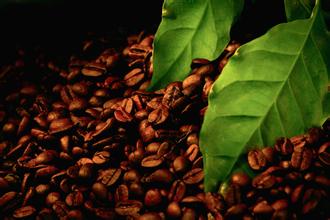
Geo-climatic production process of coffee in Rwanda
Maraba Coffee, the geographic and climatic editor, is grown in southern Rwanda, about 12km (7 miles) from the city of Butare and 150km (93 miles) from the capital, Gejali. The plan began in the Malaba area of Butare province, but was taken over by a local government organization in 2006, which is now part of the Huye district of the southern province. Due to its proximity to the East African Rift Valley and Neuenweisen,
2016-05-29 Rwanda Coffee Geography Climate production process Editor Malaba
Geo-climatic production process of coffee in Rwanda
Malaba Coffee grows in southern Rwanda, about 12 kilometers (7 miles) from the city of Butare and 150 kilometers (93 miles) from the capital, Gejali. The plan began in the Malaba area of Butare province, but was taken over by a local government organization in 2006, which is now part of the Huye district of the southern province. Due to its proximity to the East African Rift Valley and the Neuenway Forest Mountains, this area has many topography.
2016-05-29 Rwanda coffee geography climate production process Malaba Raba better than
Malaba coffee grown in southern Rwanda Lutechiro, Western Province
Maraba coffee is grown in southern Rwanda, about 12 km (7 mi) from Butare and 150 km (93 mi) from the capital, Gigali. The project began in the Malaba area of Butare province, but was succeeded by local government organizations in 2006, and the area is now part of the Huye region of Southern province. Due to its proximity to the Great Rift Valley and the Nunwe Forest Mountains, the terrain of this zone
2016-07-02 long rwanda south malaba laba coffee western province te xi producing area
Malaba Coffee from Coffee producing areas in Southern Rwanda
Grows in southern Rwanda, about 12 km (7 miles) from the city of Butare and 150 km (93 miles) from the capital, Gejali. The plan began in the Malaba area of Butare province, but was taken over by a local government organization in 2006, which is now part of the Huye district of the southern province. Due to its proximity to the East African Rift Valley and the Neuenway Forest Mountains, the terrain is sloping and steep.
2016-06-18 Rwanda South Coffee producing areas species Malaba Rabbah longer than